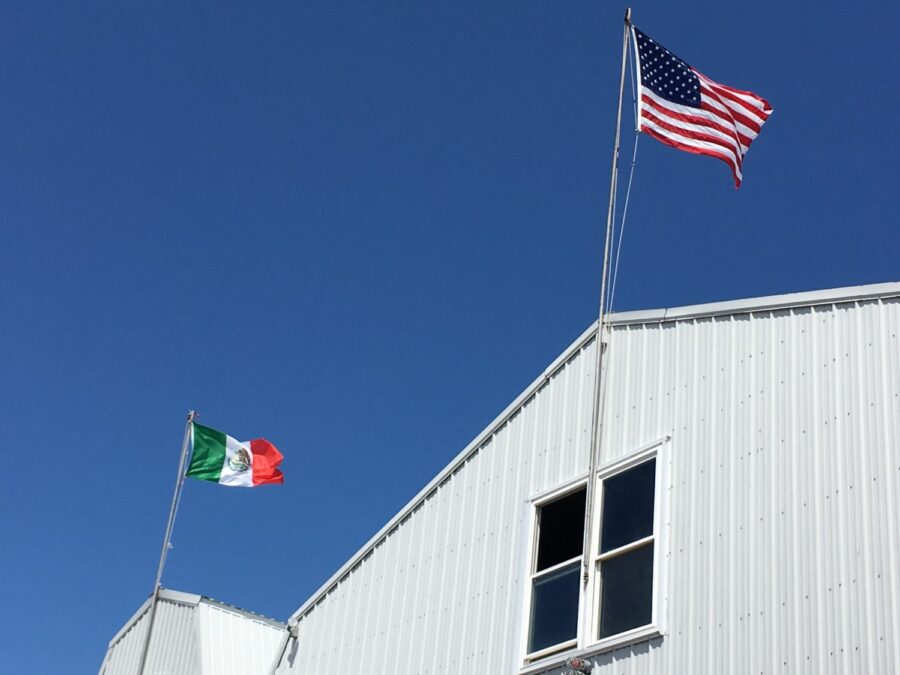
The Mexican flag wasn’t a political statement. It was an acknowledgment of economic reality.
This image—a Mexican flag flying in Trump country—encapsulates a profound contradiction about immigration in rural America that we rarely discuss honestly: communities that depend on immigrant labor also support policies designed to exclude immigrants from belonging.
Throughout this Barn Raiser series on “Rethinking Immigration and Health in Rural America,” I’ve explored the lives of immigrants on Maryland’s Eastern Shore—the Mexican women who pick crab, the Haitian workers in poultry plants, the farmworkers and their families navigating systems that weren’t designed for them. In this final installment, I want to step back and consider what their experiences reveal about rural America itself, and what possibilities might emerge if we took those experiences seriously.
Essential yet disposable
The Covid-19 pandemic made visible what had long been true: the workers we depend on most are often the workers we value least.
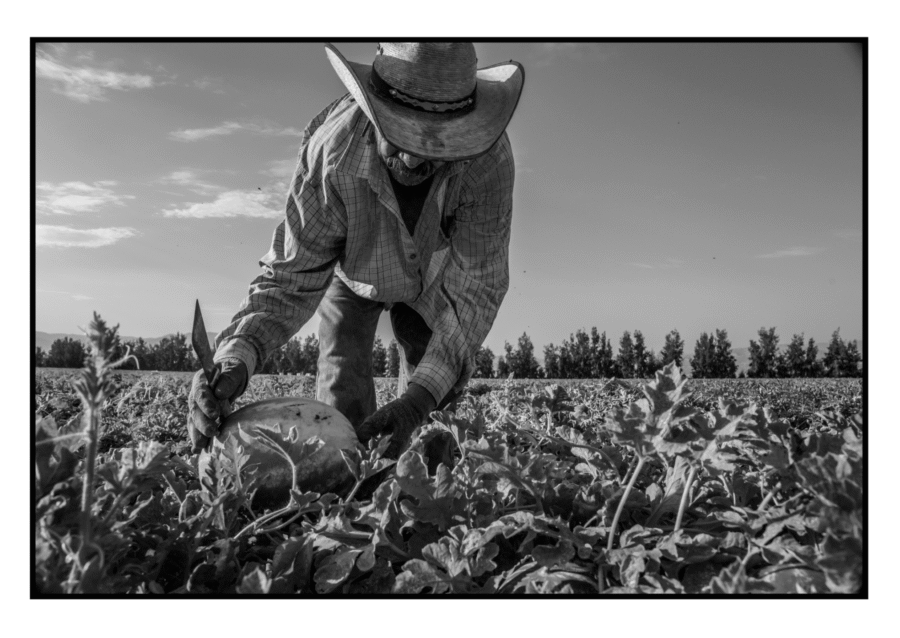
Immigrant workers in agriculture, poultry and seafood processing were deemed “essential”—required to keep working while others sheltered at home. They labored in crowded conditions without adequate protective equipment, unable to maintain social distance on processing lines, unable to self-quarantine in shared housing. Many got sick. Some died.
The paradox of “essential workers” entered public rhetoric, but the conversations often obscured something important. This wasn’t a pandemic-specific problem. The treatment of immigrant workers as simultaneously indispensable and disposable is built into the structure of rural economies.
On the Eastern Shore, I watched this contradiction play out daily. Politicians appealed to the federal government to increase visa caps for migrant workers, arguing that the H-2B program, a temporary visa for non-agricultural work that typically covers crab pickers on the Eastern Shore, was vital to the region’s iconic seafood economy. These same areas showed strong support for anti-immigrant rhetoric and policies. Immigrants were wanted for their labor but not for their presence as community members.
Valerie, a social worker I interviewed, articulated what many recognized:
They are here. They contribute to the economy and society, so why not make them a natural part of it? Many of them are paying taxes and may not ever get to retrieve any benefits from Social Security or social services that they are not eligible for.
The math doesn’t add up. Immigrants give more than they receive, yet they’re framed as takers. Over the last 30 years, immigrants have generated 17% more in taxes per capita than the average U.S.-born person. In 2023 alone, immigrants paid $1.3 trillion in taxes and received $761 billion in benefits, generating a $539 billion surplus. They sustain industries that would otherwise collapse, yet they’re treated as threats.
What rapid change reveals
Rural America is being transformed by immigration, whether it’s ready or not.
Since 1990, some rural counties have experienced growth rates of over 1,000% in their immigrant populations. Between 2010 and 2019 on the Eastern Shore, the foreign-born population increased by 90% across all nine counties. Migration has become the primary source of population growth in a region that would otherwise be shrinking.
Clara, a longtime Eastern Shore resident, described the change in generational terms. When she was a student, there were only a handful of immigrant families in the area. Now, about a third to half of her children’s classmates come from diverse immigrant families—from Asia, Latin America, the Caribbean.
“It is much more multicultural,” she told me, “which I think is great for the community. Way before my time, my parents’ era, it was a very, very secluded area … it was very private. So now I think it is definitely good for the community to see all of this.”
Not everyone shares Clara’s perspective. Rapid demographic change has also intensified racism and xenophobia in some quarters. Immigrants become scapegoats for conditions caused by structural abandonment—the closure of hospitals, the loss of jobs, the fraying of services that has nothing to do with immigration and everything to do with policy choices that have left rural America behind.
But here’s what struck me most during my research: immigrants often understand rural America’s challenges better than longtime residents give them credit for. They see the same abandoned buildings, the same struggling health care systems, the same sense of being forgotten by those in power. They recognize it because they’ve experienced versions of it before in the countries they’ve come from.
‘Room to give birth to something’
Roseline, a Haitian immigrant who has lived on the Eastern Shore for nearly 30 years, offered a perspective I haven’t forgotten. Reflecting on the region’s underdevelopment compared to other parts of the country, she said: “Compared to other states, it is not as developed, so there is room to give birth to something.”
Room to give birth to something. In that phrase, I hear not resignation but possibility. It is the recognition that new forms of community can take root in places that have been written off.
This is what I call a “landscape of care”: the unrecognized geography of community life that exists alongside official definitions of borders and bureaucracies. In these alternate landscapes, immigrants, and the providers who work with them, create relationships based on cooperation, recognition and mutual support rather than extraction and exclusion.
You can see it in the informal networks that help people access resources, in the friendships that develop across cultural lines, in the ways people look out for each other when formal systems fail. It is embodied in people like Elizabeth, a nurse practitioner operating the region’s only mobile health unit, who uses her personal credit card to extend van rentals to reach patients in remote areas. Or David, an undocumented high school student whose bilingual abilities helped local immigrant families overcome language barriers at medical appointments.
Landscapes of care are not a replacement for policy change. The creativity and generosity I witnessed emerged precisely because formal systems were inadequate. People shouldn’t have to rely on the goodwill of neighbors to access basic health care or navigate hostile bureaucracies.
But the landscape of care offers something that policy alone cannot provide: a vision of what community could look like when people recognize each other’s full humanity. It’s a refusal of the logic that treats some people as essential and others as disposable, some places as worthy of investment and others as sacrifice zones.
Shared futures
Rural America and immigrant communities face a choice.
One path leads toward continued resentment and exclusion—immigrant labor extracted while immigrant humanity is denied, rural decline blamed on the very people working to sustain what remains.
The other path recognizes what’s already true:
- Immigrants are part of rural America’s present and will be part of its future
- The challenges facing rural communities and immigrant communities are often intertwined
- That shared precarity is the foundation for solidarity rather than division
The Mexican flag flying on Hooper’s Island is a symbol of this crossroads. It can be read as an embarrassing contradiction—communities that want immigrant labor but not immigrant neighbors. Or it can be read as the beginning of recognition—an acknowledgment that these workers, and the communities they come from, matter.
Throughout this series, I’ve tried to show immigrants are not problems to be solved. They are people building lives under difficult circumstances, developing knowledge and strategies that have value far beyond their immediate communities. They offer models of mutual aid, resilience and resistance that rural America needs—models that have existed in different forms in its past.
The question is whether rural America is ready to learn from them—to see immigrants not just as workers who sustain the crab industry or the poultry plants, but as neighbors who might help sustain something larger: a vision of rural life where everyone who contributes to a community belongs to it.
That flag is already flying. The question is what it will come to mean.
Thurka Sangaramoorthy is professor of anthropology at American University. She is a cultural anthropologist with expertise in medical anthropology and epidemiology. Her research focuses on improving care for those living with HIV, developing more effective care systems for non-citizen immigrants, amplifying local community expertise as a transformative tool for enacting policies and practices that effectively address disparate environmental risks in communities of color, and advocating for social justice. Her writings on these topics appear in a wide range of scholarly and mainstream publications. She is also the author of Rapid Ethnographic Assessments: A Practical Approach and Toolkit for Collaborative Community Research (Routledge, 2020) and Treating AIDS: Politics of Difference, Paradox of Prevention (Rutgers University Press, 2014)
Have thoughts or reactions to this or any other piece that you’d like to share? Send us a note with the Letter to the Editor form.
Want to republish this story? Check out our guide.