The act was designed in the 1990s by then-House Speaker Newt Gingrich, who sought to cut back on government bureaucracy by eliminating regulations. It was engineered to allow Congress to quickly overturn regulatory rules with a simple majority, rather than the usual two-thirds vote. Critics say it’s dangerous because it enables public rules and regulations based on years of research to be quickly overturned with little debate.
“It allows Congress to basically do a thumbs up or a thumbs down, where otherwise a filibuster would apply,” says Erik Schlenker-Goodrich, executive director of the Western Environmental Law Center, a nonprofit, public interest law firm. During the CRA’s first 20 years of existence, it was used only once by the second Bush administration. But President Trump and Republicans have worked to dramatically expand and weaponize the CRA, with the Boundary Waters case being the latest example, Schlenker-Goodrich says. In 2017, the Trump administration invalidated 17 rules from the Obama era. In 2025 alone, Trump signed 22 CRA repeals.
The CRA technically gives Congress 60 days to overturn a rule after it’s passed. The Boundary Waters protections were passed over three years ago during the Biden administration, and not as a rule, but rather as a Public Land Order. This puts the Senate and administration in territory that is “extraordinarily legally questionable,” says Blaine Miller-McFeeley, a senior legislative representative at Earthjustice. “We are not done fighting, and there are a lot of open questions because this is such uncharted territory.”
The decision could set a dangerous precedent. Should the resolution be allowed to stand, it could open up all land management decisions to political attacks. Republican Senator Mike Lee of Utah, for example, has proposed a CRA resolution to eliminate the resource management plan for the Grand Staircase Escalante National Monument.
“All of these place-based attacks are occurring concurrently with talk on permitting reform,” Schlenker-Goodrich says. Signed by President Richard Nixon in 1970, the National Environmental Policy Act, or NEPA, requires federal agencies to assess how large-scale development would affect the environment before approving them. The policy has been an important tool for environmentalists, helping to halt or delay major industrial complexes or infrastructure. But in recent years, it has also curbed the deployment of solar and wind energy, as well as updates to the country’s grid required to accommodate new clean energy. Reforming NEPA has gained broad, bipartisan support in Congress, but when matched with this new use of the CRA, it could put protected areas in grave danger, Schlenker-Goodrich says.
The Trump administration’s use of the CRA also effectively cuts tribal nations out of Boundary Water negotiations. “Three tribes—the Bois Forte Band, the Fond du Lac Band, and the Grand Portage Band of Chippewa—have extensive treaty rights in Northeastern Minnesota,” New Mexico Senator Martin Heinrich said in remarks on the Senate floor. “These rights are guaranteed to them by the 1854 Treaty of La Pointe and have been reaffirmed by federal courts over and over again. By overturning the Public Land Order with a CRA resolution, Senate Republicans will not only cut tribes out of the conversation. They disrespect tribal treaty rights and directly risk those tribes’ guaranteed access to their traditional way of life and subsistence use of this place.”
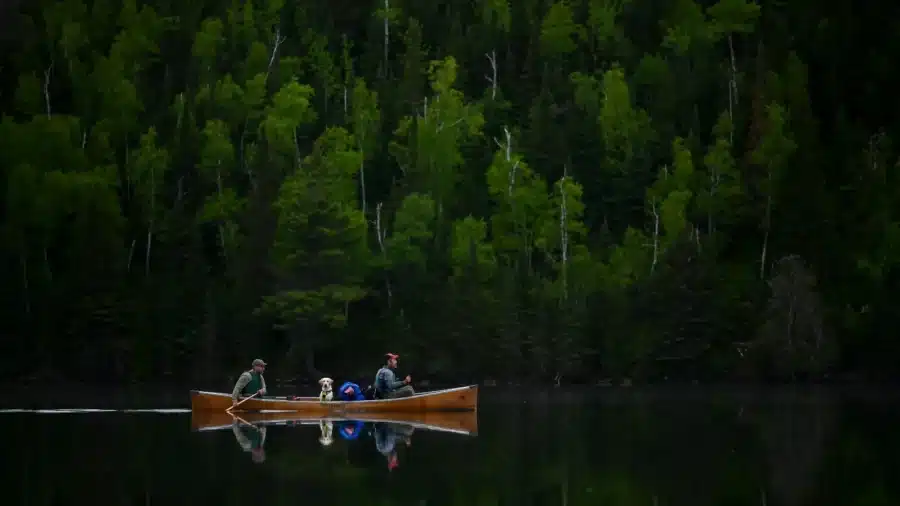
The mining ban repeal comes despite widespread opposition from environmentalists, outdoor recreation companies and neighboring communities. Minnesota Senator Tina Smith spoke on the Senate floor for five hours into the night on April 15 in an attempt to block the vote. “The Senate and House should follow the law,” Smith said, according to CBS News. “They should follow the laws they wrote about how public land orders are treated in this country. I do not believe that happened here.”
The main winner out of the Boundary Waters debacle is Twin Metals, a subsidiary of Chilean mining outfit Antofagasta. The company fought under the first Trump administration to build a copper and nickel mine on the Duluth Complex, one of the world’s largest undeveloped deposits of critical minerals located just 5 miles south of the Boundary Waters. At the time, the company was run by billionaire Andrónico Luksic, who was criticized for his connections to the Trump family—specifically for renting a house in Washington, D.C. to Trump’s daughter, Ivanka. Although Luksic has since stepped down from Antofagasta’s board, his family controls a majority stake in the company.
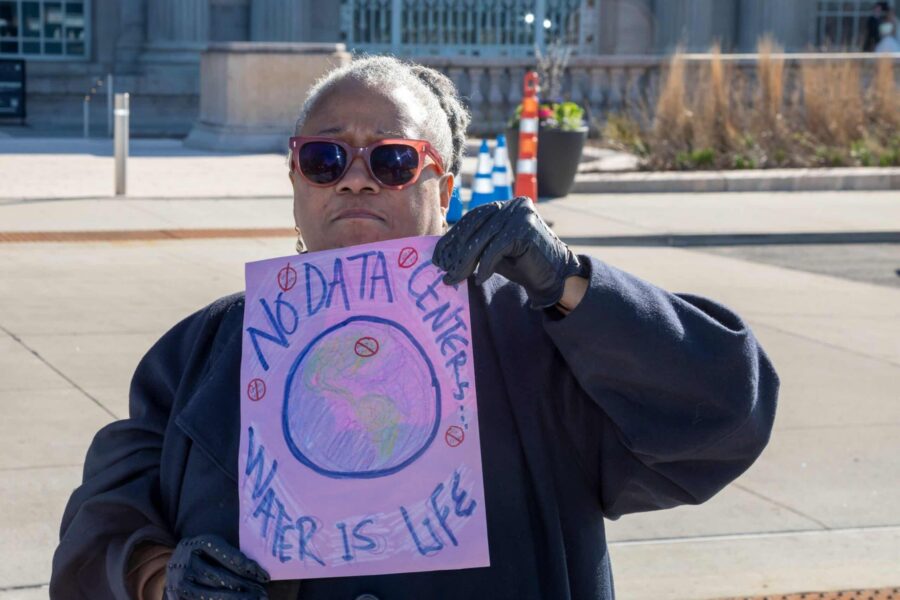
“The corruption of rich individuals around the world is a big part of this,” says Miller-McFeeley. So are data centers. Since retaking office, the administration has raced to ramp up domestic production of critical minerals—the materials that are required for computing, batteries, renewable energy and military technology.
Copper is critical to the artificial intelligence boom. The analytics giant S&P Global published a report earlier this year warning that copper demand was projected to expand 50 percent by 2040. Another recent report from the Carnegie Endowment for Peace predicted a significant nickel deficit by 2035, due in large part to demand from the defense industry and the United States’ “limited ability to increase domestic production.” Crucially, the report recommended shoring up international partnerships, rather than opening up protected land to mining, and it will take much more than mining to make the U.S. self-reliant when it comes to critical minerals. The country currently has only three copper smelters and no nickel smelters, making production the real bottleneck. Antofagasta would likely “ship its product abroad to be processed and sold offshore, and then maybe resold back to the U.S.,” says Miller-McFeeley.
Even if this is merely a test case for the administration to see how far they’re able to push legal limits, it has once again set the federal government in opposition of its own researchers. “The U.S. Forest Service is 100 percent opposed to mining in this watershed,” says Marc Fink, director of the Public Lands Law Center and a senior attorney for the Center for Biological Diversity. In 2016, the Forest Service determined that a sulfide-ore copper mine, such as the one Twin Metals is proposing, could cause “extreme” and “serious and irreplaceable harm” to the area.
“This clearly goes against the science and the administration’s own agencies,” Fink says. “It’s a really unfortunate situation, but we’ll definitely keep fighting.”
The Boundary Waters bill will now head to President Trump’s desk. He is expected to sign it.
Rebecca Egan McCarthy is the the climate news reporting fellow at Grist. She was previously an editor at the Science History Institute.
Have thoughts or reactions to this or any other piece that you’d like to share? Send us a note with the Letter to the Editor form.
Want to republish this story? Check out our guide.